

Most furnace repairs in Dallas-Fort Worth cost between $150 and $1,500 in 2026. Small fixes like a flame sensor, igniter or capacitor usually land between $150 and $450. Larger parts such as a blower motor, inducer motor or control board run $400 to $1,200. A cracked heat exchanger is the outlier, at $1,500 to $3,500 or more, and it usually means the furnace should be replaced.
The final number depends on which part failed, how old your furnace is and whether you call during normal hours or on a freezing night. This guide breaks down typical costs by repair, explains what moves the price and shows how to decide whether to fix or replace.
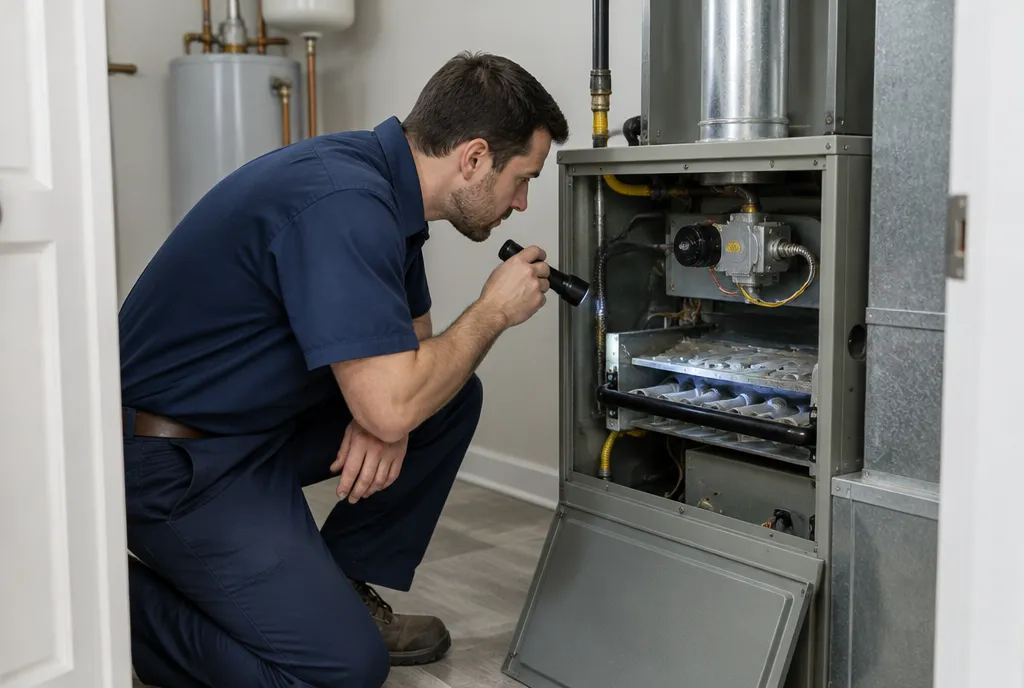
Furnace repair cost by problem
| Repair | Typical cost in DFW | What it does |
|---|---|---|
| Diagnostic / service call | $75 to $150 | Finds the fault. Often credited toward the repair. |
| Thermostat repair or replacement | $100 to $350 | Tells the furnace when to run |
| Flame sensor cleaning or replacement | $100 to $300 | Confirms the burner is lit, shuts gas off if not |
| Hot surface igniter | $150 to $450 | Lights the burners |
| Capacitor | $150 to $400 | Helps the blower and inducer motors start |
| Pressure switch | $150 to $400 | Confirms the venting is working before ignition |
| Gas valve | $300 to $800 | Controls gas flow to the burners |
| Control board | $300 to $900 | Runs the furnace’s start-up sequence |
| Inducer motor | $400 to $1,100 | Draws exhaust out through the vent |
| Blower motor | $450 to $1,500 | Moves heated air through the ducts |
| Heat exchanger | $1,500 to $3,500+ | Transfers heat to the air. Cracks are a safety issue. |
Ranges are wide because brands, furnace age, single-stage versus variable-speed motors and parts availability all change the price. A variable-speed ECM blower motor, for example, costs far more than a standard motor.
What affects the cost of furnace repair
The part that failed. Sensors and igniters are cheap. Motors, boards and heat exchangers are not. The diagnosis matters because a misdiagnosed repair wastes money.
Furnace age and brand. Older furnaces can need hard-to-find parts, and some premium brands charge more for components. Systems still under manufacturer warranty may cover the part, leaving you to pay only labor.
Single-stage versus modulating. Newer high-efficiency furnaces have more electronics and more expensive parts than a basic single-stage unit.
Time of call. Emergency and after-hours calls often carry a premium. On the first cold night of the year, every HVAC company in DFW is busy. Calling early in the day, or scheduling a check before the cold arrives, avoids both the wait and the surcharge.
Accessibility. A furnace in an attic or tight closet takes longer to work on than one in a garage or utility room.
Diagnostic fees. Some companies charge a service call and credit it toward the repair. Others charge a flat fee regardless. Ask before you book. At Cold Factor, the diagnostic fee is waived when you have the service performed.
The most common furnace repairs in North Texas
Texas furnaces run less than in colder states, so they often sit idle for months. That makes certain failures more likely when the first cold snap arrives:
- Dirty flame sensor or failed igniter. The furnace tries to start, the burners don’t light or shut off after a few seconds. This is the most common no-heat call, and it is usually an inexpensive fix.
- Failed capacitor. The blower hums but won’t start. A low-cost part that is easy to misdiagnose.
- Clogged filter and restricted airflow. This can trip the high-limit switch and cause the furnace to shut off. A new filter solves it, but if it keeps happening, something else is wrong. See our guide to what causes a heater to short cycle.
- Thermostat problems. A dead battery or wrong setting accounts for many “no heat” calls. Check it first. Our thermostat troubleshooting guide walks through it.
- Worn blower motor. Squealing, rattling or weak airflow. More expensive, and a sign the furnace is aging.
Not sure what you are hearing? The warning signs are covered in 6 signs your heater needs to be repaired.
Furnace repair or replacement: how to decide
Use these four checks.
1. Age. Furnaces last about 15 to 20 years with regular maintenance. If yours is older than 15 and needs a major repair, replacement is worth pricing.
2. The 50 percent rule. If the repair quote is half or more of the cost of a new furnace, replacement is usually the better investment. A $1,200 blower motor on a 6-year-old furnace is worth doing. The same repair on a 17-year-old unit may not be.
3. Repair frequency. If this is the second or third repair in two years, you are paying for a system that is failing.
4. Safety. A cracked heat exchanger can leak carbon monoxide. If a technician finds one, don’t keep running the furnace. Replacement is typically the recommendation.
A new furnace is a bigger spend than any repair, and the price depends on size, efficiency and whether ductwork or venting changes are needed. Ask for a written, itemised quote before you decide. For a deeper look at replacement, see heating installation and replacement. If you are comparing, our AC replacement cost guide for DFW uses the same approach for cooling.
How to avoid a big furnace repair bill
- Tune up before the first freeze. A fall inspection catches worn igniters, dirty sensors and failing capacitors while they are cheap. See furnace maintenance: essential for winter and beyond.
- Change the filter on schedule. Every 1 to 3 months during heating season. A clogged filter is one of the leading causes of avoidable failures.
- Don’t ignore the warning signs. Noises, short cycling and rising bills usually point to a worn part. Read why rising energy bills may point to your furnace.
- Consider a maintenance plan. Cold Factor’s HVAC maintenance membership includes two visits a year, from $192 a year for one system, with 10% off repairs and front-of-the-line service.
- Get itemised quotes. For any repair above a few hundred dollars, ask for the part, the labor and the warranty in writing. Our guide on getting multiple quotes explains how.
Financing and help with the cost
A major furnace repair or replacement doesn’t have to hit your budget all at once. Cold Factor offers flexible financing, and you can see options on our financing and maintenance plans page and current offers on the specials page. High-efficiency systems may also qualify for incentives, covered on our rebate and tax credit page.
Furnace repair in DFW from Cold Factor
Cold Factor repairs gas, electric and oil furnaces across Flower Mound, Roanoke, Lewisville, Frisco, Coppell, Grapevine, Southlake and the rest of North DFW. We diagnose the problem first and give you a written price before any work begins. Learn more about our furnace repair and installation service, or if your heat is out right now, see our emergency HVAC service.
Furnace down? Call (469) 200-0982 or schedule service online.
FAQ
How much does it cost to fix a furnace?
Most furnace repairs in DFW cost between $150 and $1,500. A flame sensor, igniter or capacitor is usually $150 to $450. A blower motor, inducer motor or control board is $400 to $1,200. A cracked heat exchanger can exceed $1,500 and often means replacement.
Is it worth repairing a 15-year-old furnace?
For a small repair, yes. For a major repair, such as a heat exchanger, blower motor or control board, it is often better to put the money toward a new, more efficient furnace. A technician can give you both numbers.
Why is my furnace repair so expensive?
The cost is driven by the failed part, your furnace’s age and brand, and when you call. Motors, boards and heat exchangers cost much more than sensors and igniters. After-hours calls often cost more than standard appointments.
How much does a furnace diagnostic cost?
A diagnostic or service call typically costs $75 to $150 in DFW. Some companies credit it toward the repair. Ask when you book.
Should I repair or replace my furnace?
Consider replacing if the furnace is over 15 years old, the repair costs half or more of a new unit, repairs are frequent, or the heat exchanger is cracked.
How can I lower the cost of furnace repair?
Schedule a tune-up before winter, change your filter regularly, address noises early and avoid emergency after-hours calls by checking your system before the cold arrives.
Does homeowners insurance cover furnace repair?
Standard homeowners insurance generally doesn’t cover repairs for normal wear and tear. It may cover damage from a covered event such as a fire. A home warranty or the manufacturer’s parts warranty may help. Check your policy.